A/B Testing and AI
A/B testing is one of the core methods used in Conversion Rate Optimization. It allows us to compare different versions of a webpage and measure which version performs best based on real user...

21 augustus 2026 | Geschreven door Carmen Bertelink
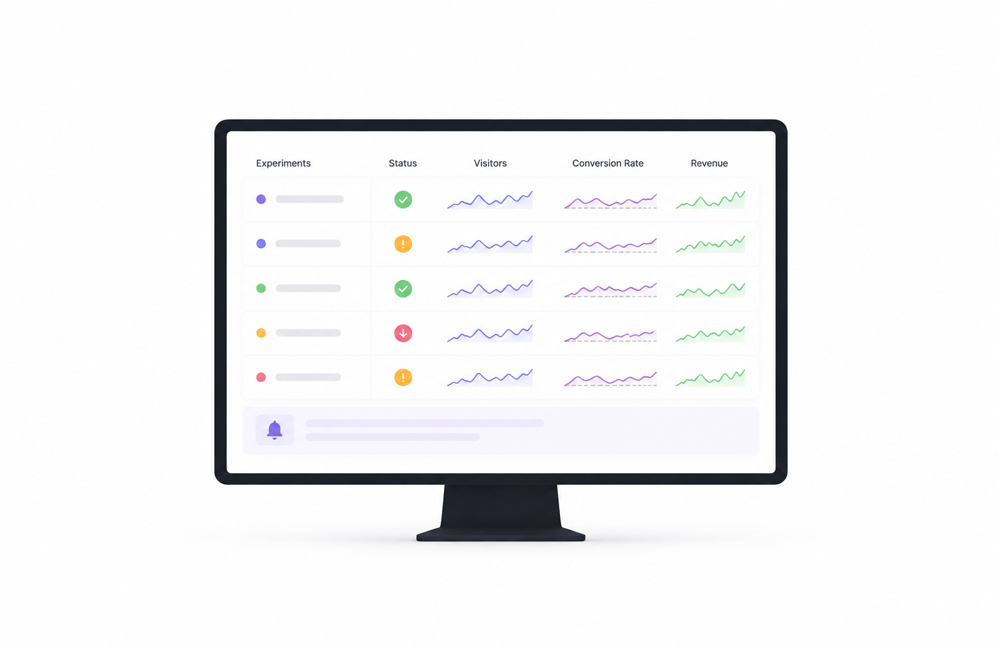
Running an A/B test is only part of the experimentation process. Once a test is live, it needs to be monitored carefully. Are the right metrics coming through? How are they developing over time? And is anything happening that deserves attention?
When several experiments are running at the same time, these checks can quickly become time-consuming. That is why we use a CRO monitoring board across multiple client experimentation programs.
Our CRO monitoring board brings the most relevant experiment data together in one clear overview.
Instead of opening different reports and checking experiments one by one, teams can quickly see which tests are running, how key metrics are performing and where attention may be needed.
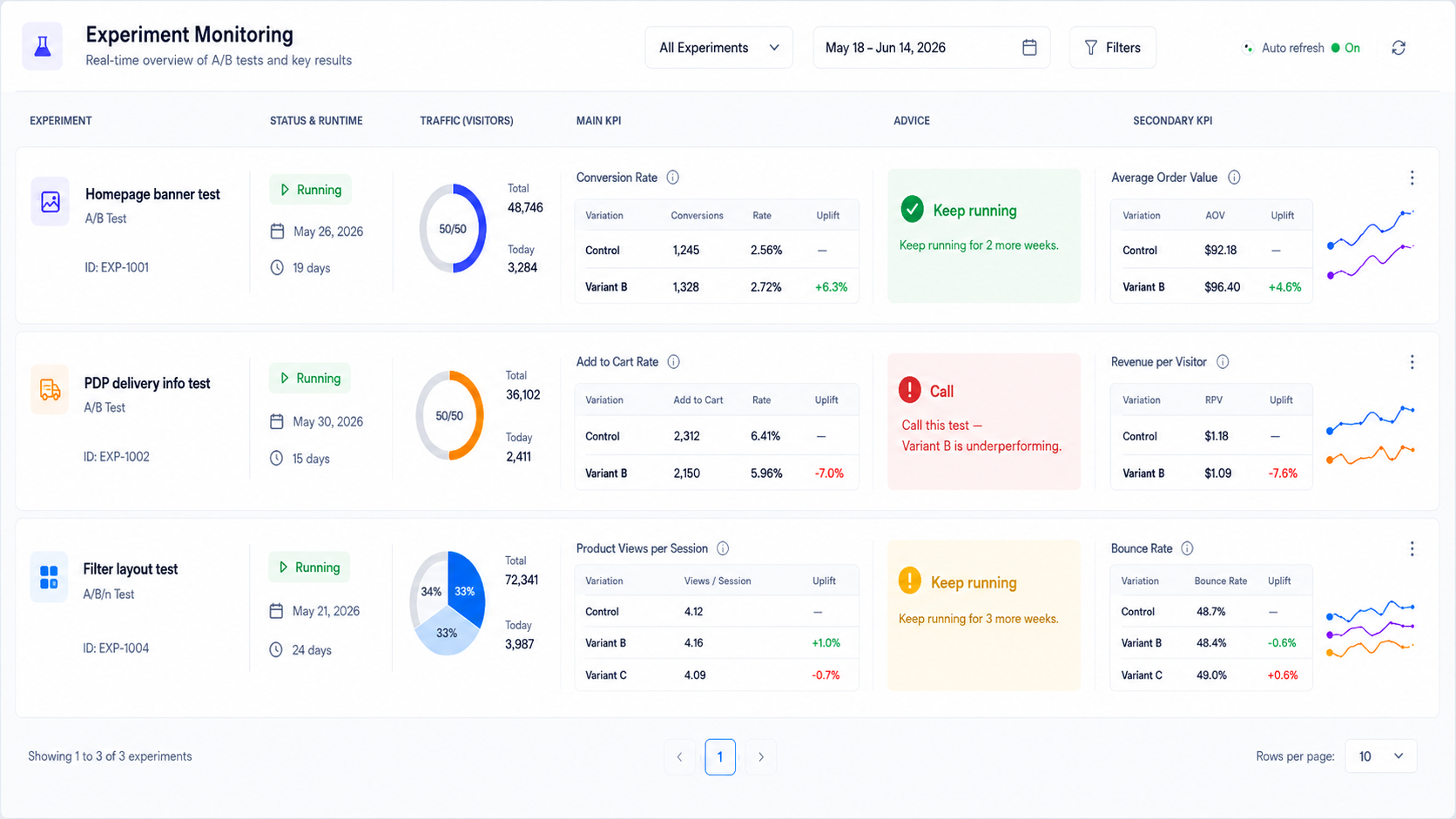
For example, if several experiments are live at once, the board makes it easy to spot that one test is performing as expected while another shows an unexpected drop in an important KPI.
This reduces manual work and makes experiment monitoring faster and more consistent.
Conversion rate is important, but it rarely tells the whole story.
Depending on the experiment, metrics such as add-to-basket rate, sign-ups, average order value or revenue per visitor can be just as relevant.
A product page test might, for example, improve add-to-basket rate while revenue per visitor decreases. Looking at both metrics gives a much clearer picture than focusing on conversion alone.
By monitoring multiple KPIs at once, teams can quickly identify changes that deserve a closer look.
The board does more than display numbers. It also provides advice based on the experiment data, helping the optimization team decide where to focus.
That could mean highlighting that:
The final decision still remains with our experts. They review the context and decide whether an experiment should continue, be checked further or be paused.
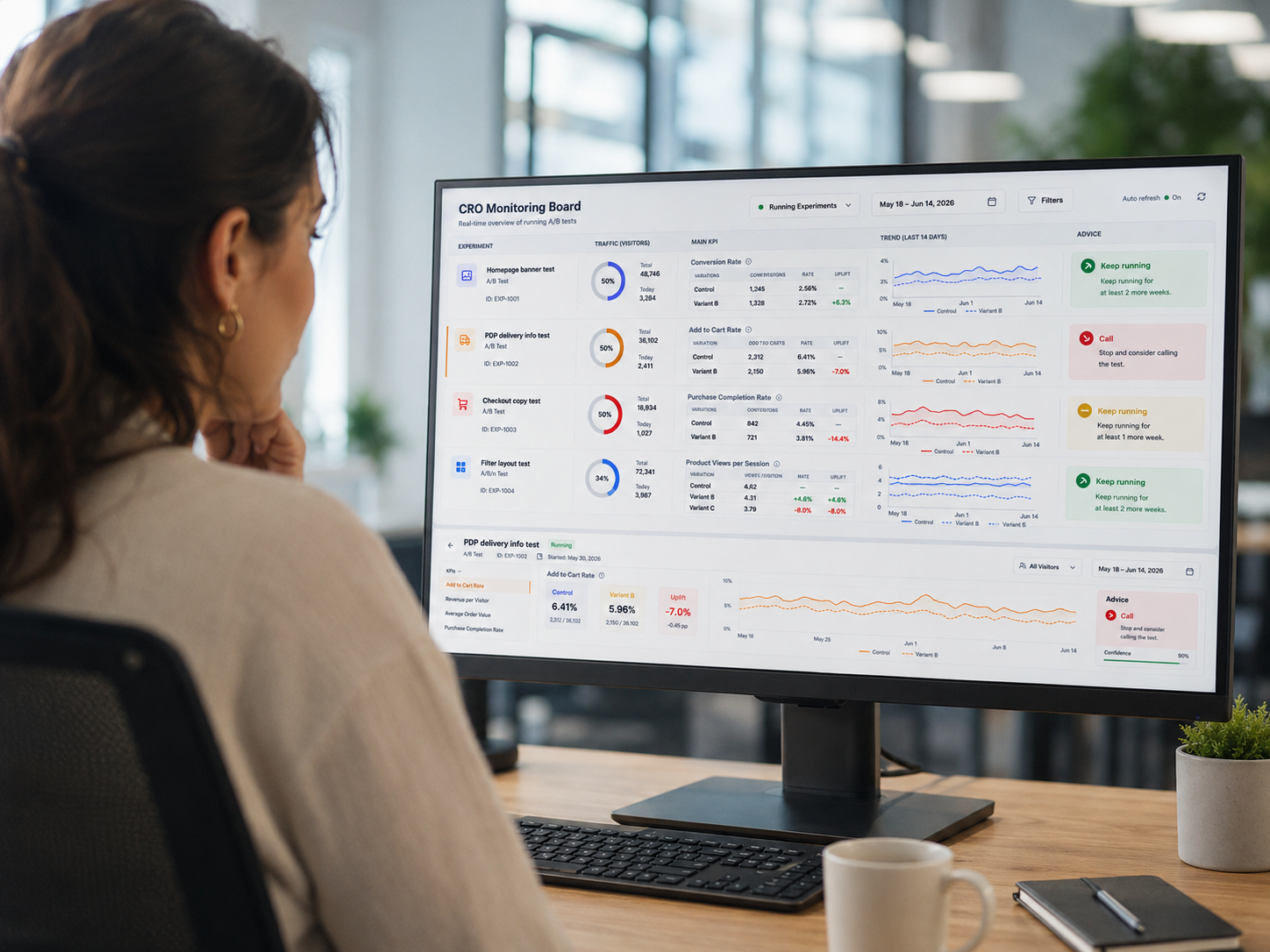
The board takes care of the repetitive monitoring, giving the team more time to interpret results and make better decisions.
Monitoring one or two experiments manually is manageable. With multiple tests running at the same time, it quickly becomes inefficient.
A CRO monitoring board makes that process scalable. Teams can see active experiments in one place, identify which tests need attention and spend less time collecting data manually.
Ultimately, that means more time for what matters most: understanding user behaviour, interpreting experiment results and turning those insights into better optimization decisions.
Want to know how smarter experiment monitoring could support your CRO process? Give us a shout!